
Willow Crafting Experience at Genbudo Museum
The Origins of Toyooka's Bag-Making Industry
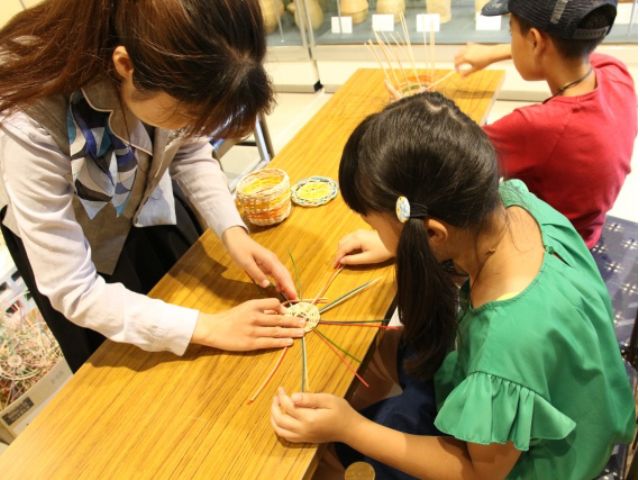
It is said that Toyooka’s history as a bag-making town began with local craftsmen producing traveling containers created from materials from willow trees. As these containers grew in popularity across the country during the Edo Period (1603~1867), bags created using weaving techniques known as yanagi-gori (willow craft) and eventually western-style bags produced in Toyooka gave the city a reputation famous for bag-making.
Yanagi-gori (willow craft) is wickerwork that is made by hand using a species of willow that thrives in the Toyooka area. This sturdy and supple material produces durable items. Rattan is also used.
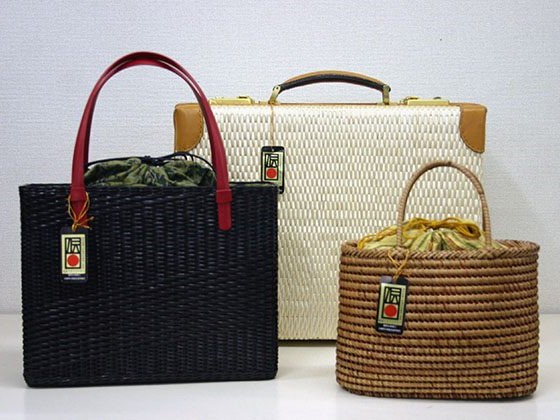
Woven baskets were an important product when Toyooka was a growing castle town. Other items followed, including storage containers, lunch boxes, and bags. Some of the bags were eventually given handles and locks in imitation of Western-style handbags. The craft is still practiced by a few artisans in the Toyooka area, and yanagi-gori goods are sold at stores in Izushi, Kinosaki Onsen, and Toyooka.
Experience Willow Crafting
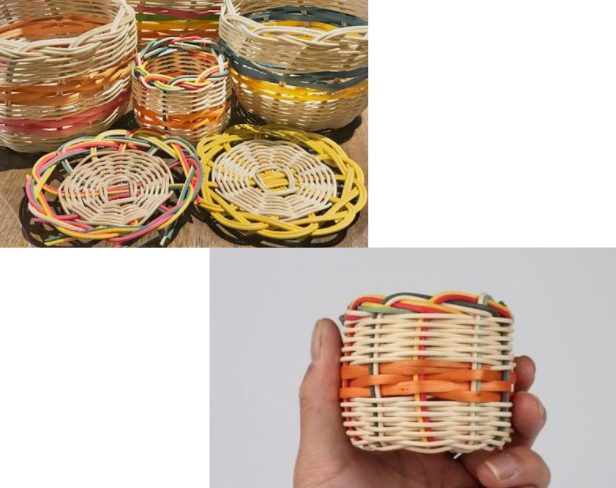
At the Genbudo Museum in Central Toyooka, visitors are welcome to try their hand at creating their very own willow craft design, with three different options available: a small basket, a large basket, or a keepsake coaster.
Baskets are created using willow weaving techniques, and coasters are created with rattan.
Design Options
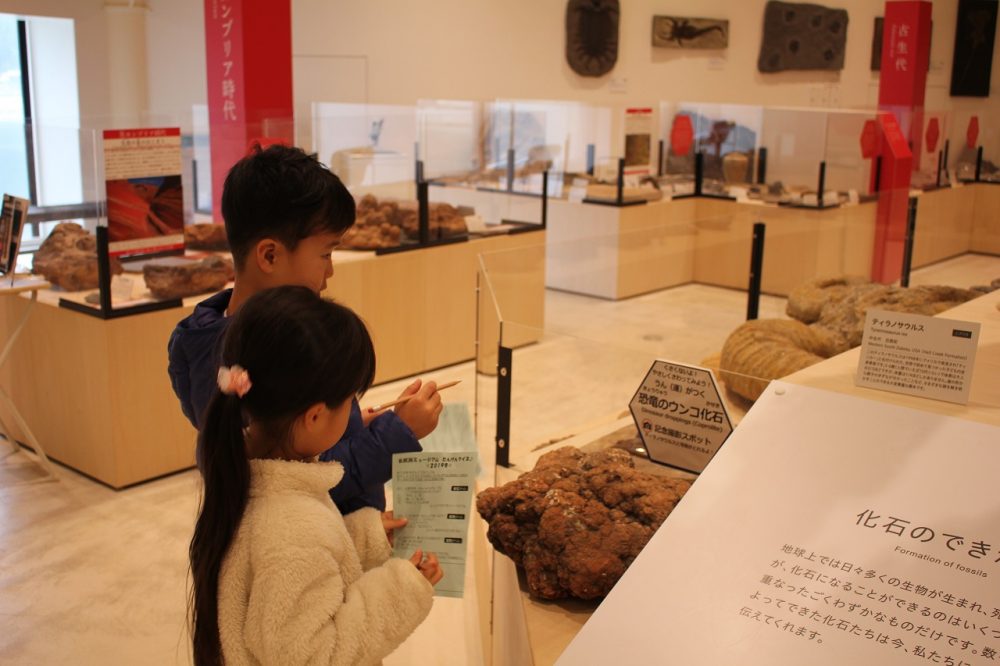
Museum challenge: Quiz, win, enjoy!
Explore the museum and challenge the quiz!
Winners will get prizes from the museum.
** Small children can try with their parents.
DETAILS
- RESERVATION DEADLINE
- 5 days before activity
- ACTIVITY OPTIONS
-
- Plan A (small basket)
- Plan B (drink cup sized basket)
- SCHEDULE
(Some times may differ) -
1) Arrive at Genbudo Museum
2) Create your own willow craft design at the Museum with a guide
3) Explore Genbudo Museum
・Required time: 1 hour
- ACCOMPANYING GUIDE
(INCLUDED OR NOT) - Included
- MINIMUM NUMBER OF PEOPLE
- 2
- MAXIMUM NUMBER OF PEOPLE
- 10
- IMPORTANT INFORMATION
-
・Those accessing Genbudo Museum by train (Genbudo Station) will need to contact Genbudo Museum to reserve a time to be picked up by boat since Genbudo Station is located on the opposite side of the Maruyama River. Public buses to Genbudo Museum depart from Kinosaki Onsen Station and pre-bookimngs is not needed.
・Activity starts during the following hours: 9:00–11:00 and 13:00–16:00. Please register within these time frames.
・If you are late, your activity may be cancelled without refund.
- MUST READ NOTES
-
・Children 5 years of age and under can participate without the willow crafting activity (in this case, please ask about pricing and pay for them at the Gebudo Museum).
・Children 3 to 5 years of age cost 400 yen for museum entry.
・For children 5 years of age and under who wish to participate in the willow crafting activity, please ask about pricing and pay for them at the Genbudo Museum.
・Children 2 years of age and under can enter Genbudo Museum for free
IMPORTANT: Please let us know your desired start time along with the number and ages of all participants (including infants) on the Request Form.
Even if any of the above criterion applies to a member of your group, please let us know how many participants will be in your group.
- PRICES
(Per person unless otherwise noted) -
Number of Participants Price for Plan A (ages 13 and up) Price for Plan A (ages 6-12) Price for Plan B (ages 13 and up) Price for Plan B (ages 6-12) 2-10 people 2,400 yen 2,100 yen 2,900 yen 2,600 yen
- INCLUDED IN THE PRICING
- Museum entry, English guide fee, sightseeing boat, willow craft activity fee, castella, insurance fee
- CANCELLATION FEES
-
Day of Cancellation Cancellation Fee (% of activity price) After 17:00 1 weekday before 100% 1 weekday before by 17:00 50% 2-7 weekdays before 30% 8+ weekdays before 0%
- ACCEPTED PAYMENT TYPES
- Pay by credit card (VISA, MASTER, JCB, AMEX, DC) via an activity confirmation link in an e-mail that we will send to you following your reservation.
- OPERATOR NAME
- Genbudo Museum