
Returning to the main street, reinforced-concrete buildings come into view on both sides. Known collectively as Toyooka Reconstruction Architecture, these structures still stand even after the earthquake. Their retro blend of Japanese and Western styles forms one of the most iconic townscapes in Downtown Toyooka.
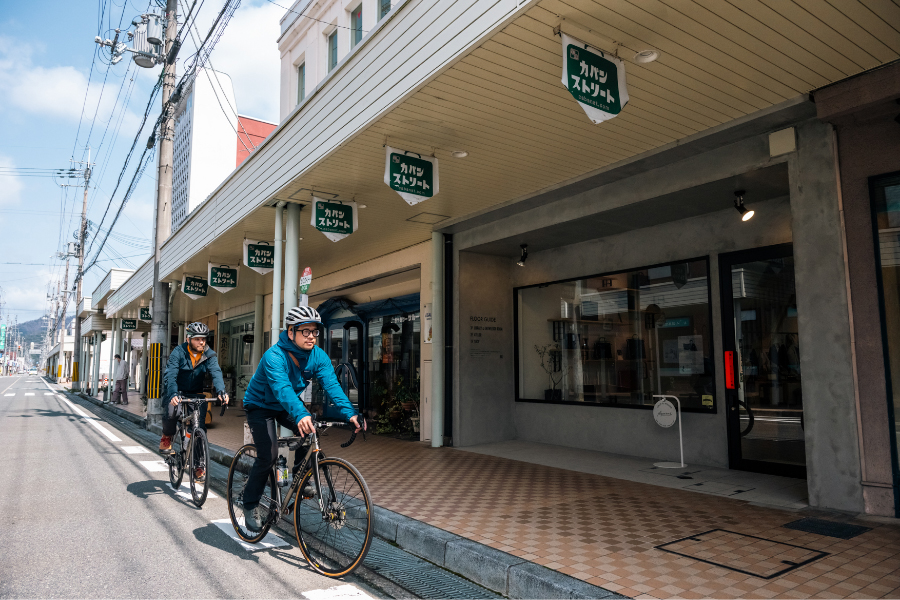
Continuing on, we soon reach Caban Street, where rows of bag shops line the road. This area showcases Toyooka’s long-established bag design industry along a lively shopping street, creating an atmosphere truly unique to Toyooka. Here you’ll find bag-cleaning specialists, shared ateliers where craftsmen work side by side, a café attached to a wallet specialty shop, and workshops run by master artisans. It’s a street best explored on foot, taking time to browse and appreciate the craftsmanship.
Crossing the wide Maruyama River and riding a little farther, Mie Elementary School comes into view. At the back of the school grounds stands a nesting tower for Oriental White Storks, and the children attend their classes watched over by these symbolic birds. Turning right at the nearby intersection, expansive rice fields open up on both sides, and the road stretches straight ahead toward Hyogo Park of the Oriental White Stork.
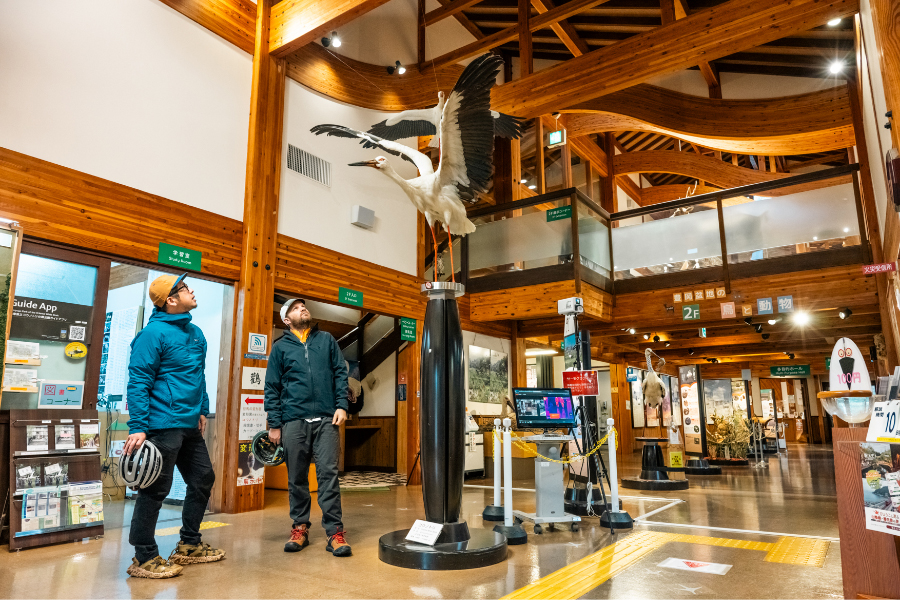
After learning about the stork’s ecology and Toyooka’s efforts to live in harmony with nature, we head to nearby Kukuhi Shrine.
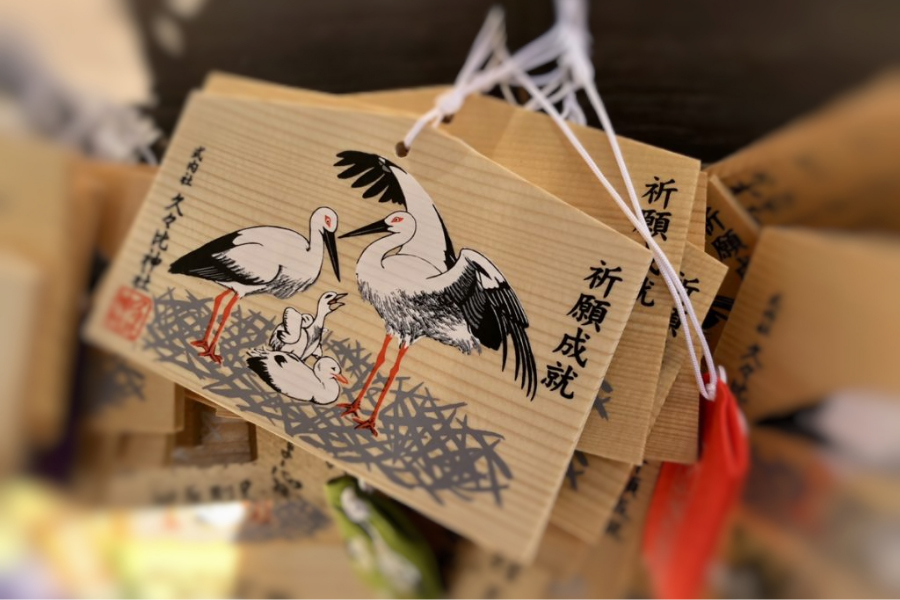
Kukuhi Shrine is an ancient Shinto shrine dedicated to Kukunochi-no-Kami, the deity of trees. The name “Kukuhi” is said to derive from an old Japanese word for the stork, and the shrine is home to legends associated with these birds. As a symbol of happiness and fertility, the stork is believed to bring children, and many visitors come here to pray for safe childbirth and healthy families. The shrine is adorned with numerous ema prayer plaques bearing such wishes. After praying for a safe journey, we set off once more.
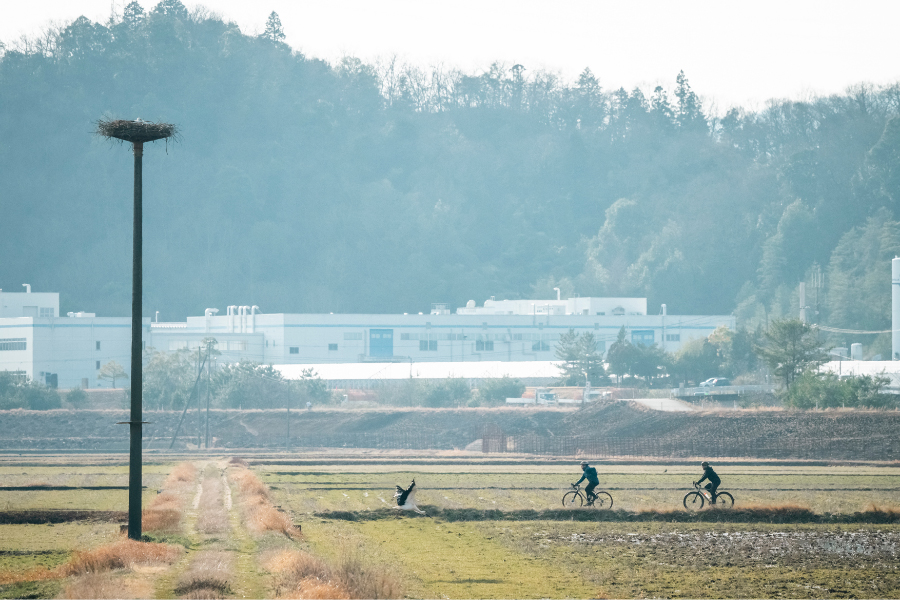
As we ride through rice fields that stretch endlessly in every direction, a stork suddenly takes flight from its nesting tower and glides down before us.
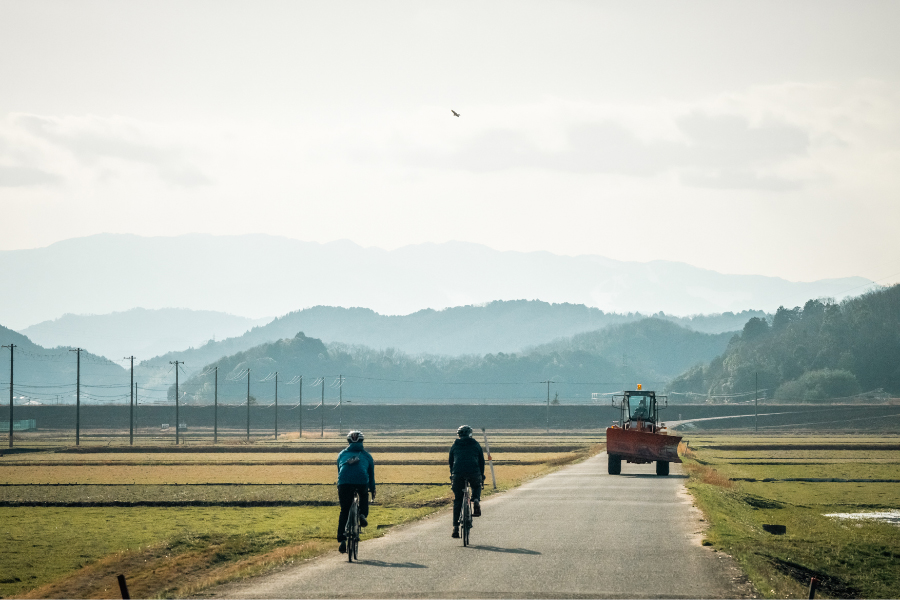
It feels like a sign of a truly wonderful journey ahead.
After completing the rental bicycle procedure and adjusting the bike to fit, it’s time to set off into the streets of Toyooka.
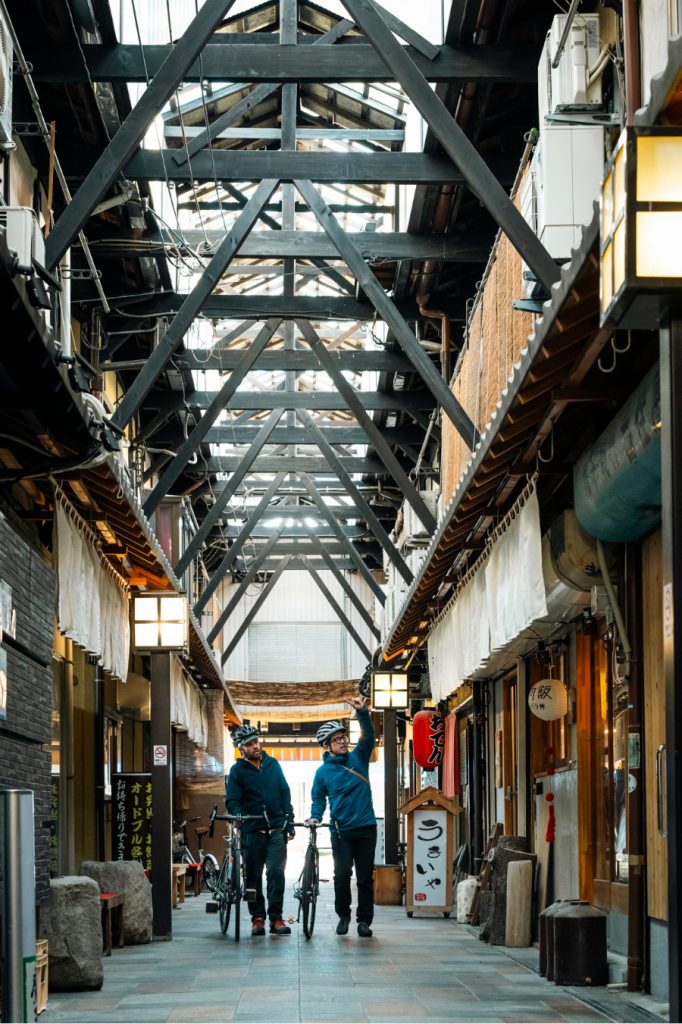
With JR Toyooka Station behind us, we ride along the main street. Soon, a flower shop appears on the right, and right next to it, a wooden shopping arcade spreads out like a tunnel. Stepping inside, the bustle of the street fades away as if by magic, revealing a calm and slightly nostalgic world.
Soft light filters down through natural skylights, illuminating lanterns and shop signs. Fureai Shopping Arcade, about 70 meters long, is lined with a colorful mix of shops—florists, greengrocers, delicatessen stores, and small eateries.
Fureai Shopping Arcade’s history dates back nearly 100 years. It was established in 1927 after the 1925 North Tajima earthquake as the Toyooka Public Market, part of the city’s reconstruction efforts. It has since been cherished as “Toyooka’s kitchen,” supporting local life for generations.