
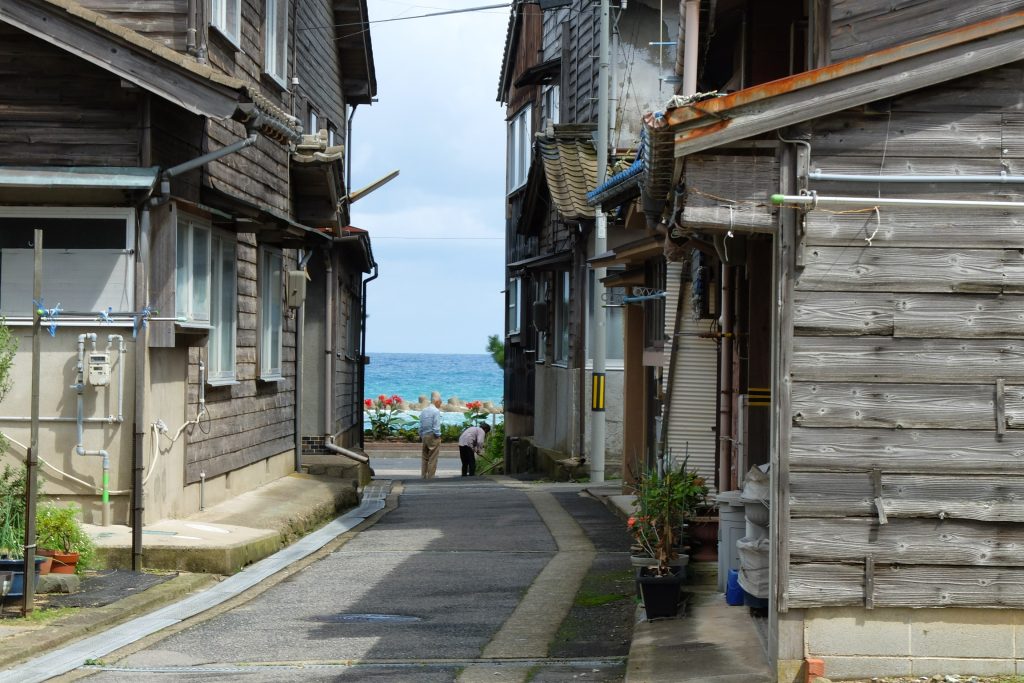
Takeno is known as a port town, where tradition can be observed around every corner.
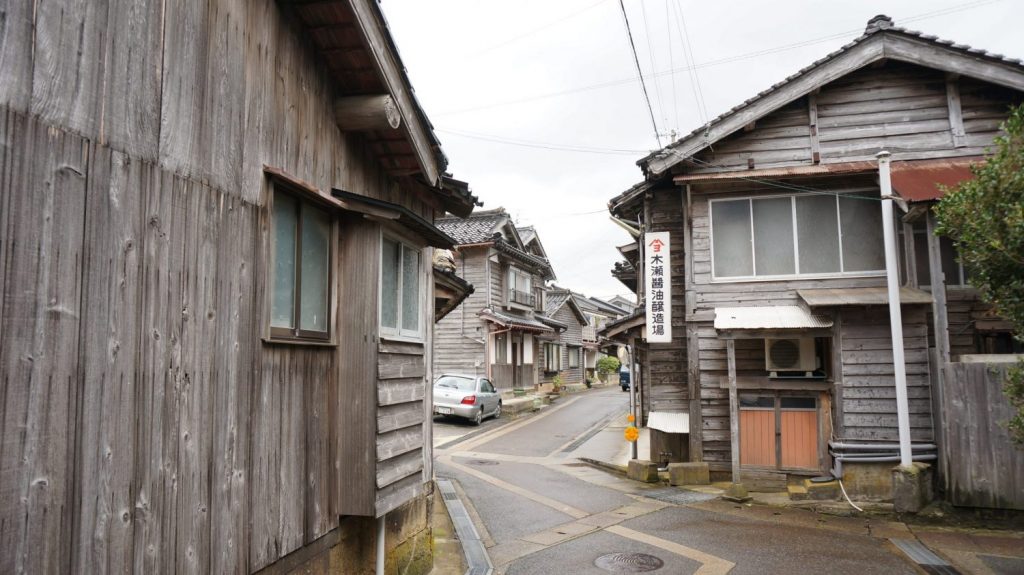
Most buildings dotting the townscape belong to a unique architectural tradition that goes by the name of “yakisugi,” literally translated to “charred cedar” in English.
Thick, brown cedar boards are lightly burnt on the surface – a method believed to strengthen and waterproof the wood, and provide a sturdy foundation for protection against the strong, salty sea winds the town’s shores are so often acquainted with.
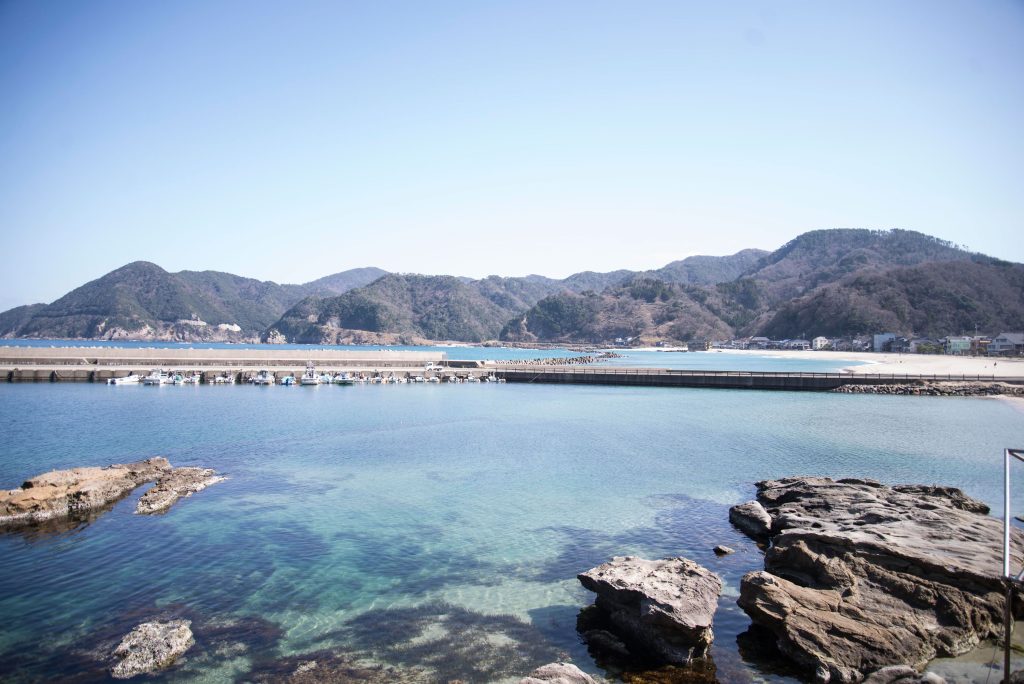
Cyclists will see the San’in Kaigan UNESCO Global Geopark’s Takeno Beach, one of Japan’s top 100 beaches and also the stunning home of Nekozaki Peninsula.
With an imaginative mind, this majestic hilly landmass transforms into a crouching feline guardian for the town and Kitamae ships, truly living up to its namesake “Nekozaki” or “Cat Cape.”
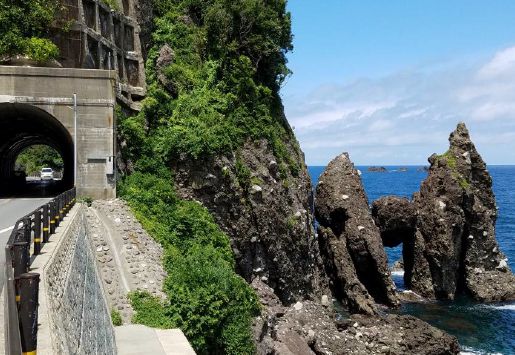
Hasakari is local dialect that roughly translates to “stuck” or “to be wedged between.”
The three rocks used to be one large rock with a cave that had been eroded by the waves.
Further erosion caused the upper part of the cave to collapse and become stuck, creating the current natural art formation.
After cycling, end the day with a refreshing soak in Takeno’s Kitamaekan Hot Spring with stunning views of the Sea of Japan!
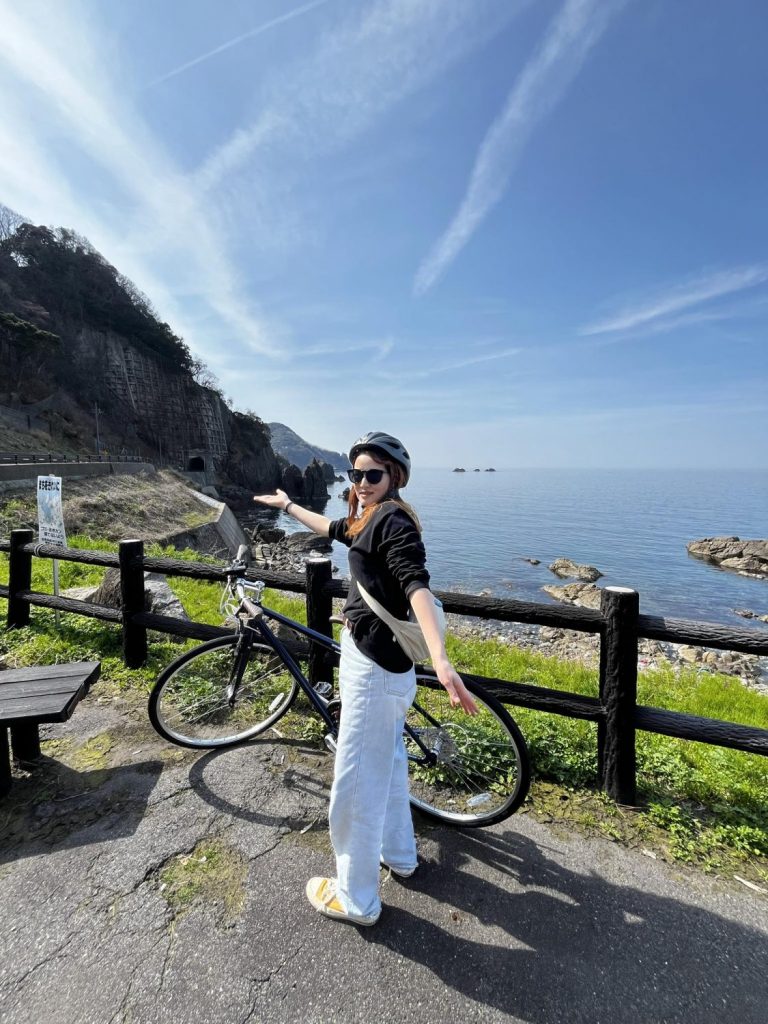
Go on a cycling tour of Takeno Beach, one of Japan’s top 100 beaches, and the surrounding fisherman’s town!
Along the route you will learn about the cultural history and geology of the area, including the history of Takeno’s sea-faring ship trade and special rock formations part of the local UNESCO San’in Kaigan Global Geopark.